Reference checks are often one of the last moving parts before a behavioral health organization can finalize a hire, confirm a start date, and move the employee into onboarding. But in many HR teams, the process still lives in scattered email threads, paper notes, and spreadsheets that are difficult to review later. When reference conversations are undocumented, incomplete, or delayed, hiring decisions can stall and handoffs to onboarding become harder to manage.
Reference check tracking software gives behavioral health providers a more reliable way to organize outreach, document responses, monitor completion, and keep hiring records connected to the employee file. For organizations hiring across multiple programs, roles, or locations, that structure helps reduce avoidable delays while keeping the hiring process more consistent and audit ready.
Key Takeaways
What Is Reference Check Tracking Software?
Reference check tracking software is a system used to manage the operational side of employment references. Instead of relying on inboxes and informal notes, HR teams can use a structured workflow to record who needs to be contacted, when outreach was attempted, whether a response was received, and what information was documented before a hiring decision moved forward.
In behavioral health, this matters because hiring often involves roles with direct client contact, documentation responsibilities, supervision requirements, and program-specific expectations. A reference process that is handled casually can slow down hiring or create confusion about whether required steps were completed. Software brings more consistency to that process and helps HR teams maintain a cleaner record.
Why It Matters for Behavioral Health Providers
Behavioral health organizations rarely hire for just one type of role. HR teams may be supporting therapists, case managers, residential staff, intake coordinators, supervisors, administrative employees, and program leaders at the same time. Each opening can involve different timelines, hiring managers, and risk considerations. Without a consistent way to track reference checks, it becomes easy for one candidate file to move forward while another sits incomplete because a final callback or documentation step was missed.
That inconsistency creates more than scheduling problems. When reference results are saved in personal notes or separate spreadsheets, leadership may not have a clear view of how hiring decisions were documented. HR may also struggle to show whether internal hiring steps were followed consistently across candidates and locations. Even when references are not a formal regulatory requirement, disciplined documentation supports better hiring governance, cleaner handoffs, and less confusion if a decision is reviewed later.
For growing providers, faster hiring also matters because open positions can affect client access, supervisor workloads, and coverage across programs. A delayed reference step may push back orientation, training, credentialing, or a planned start date. Software helps teams see those risks earlier and keep the process moving.
Common Problems With Manual Reference Check Workflows
Many teams begin with email templates, phone notes, and shared spreadsheets. That can work for a small hiring volume, but it often becomes unreliable as the organization grows.
These gaps create unnecessary administrative friction. They also make it harder to demonstrate that the organization follows a controlled, repeatable hiring process instead of an ad hoc one that depends on individual memory.
What to Look For in Reference Check Tracking Software
The best reference check tracking software for behavioral health providers should do more than record a yes or no result. It should support accountability, documentation quality, and smooth workflow handoffs.
Status tracking by candidate and role
HR teams should be able to see whether each candidate is awaiting outreach, awaiting response, fully documented, or cleared to move to the next stage. That visibility matters when multiple openings are active at once.
Standardized documentation fields
A useful system should help staff capture consistent information from each reference interaction. Structured notes improve quality and make later review easier than relying on freeform call summaries alone.
Task ownership and reminders
Someone needs clear responsibility for the next step. Automated reminders and visible ownership reduce the chance that a reference request disappears in a busy hiring cycle.
Connection to onboarding readiness
Once the final reference step is complete, the workflow should support a clean handoff into offer approval, onboarding preparation, and employee record creation. That transition is where many organizations lose momentum.
Centralized record retention
Reference documentation should remain easy to retrieve for internal review while still being handled with appropriate access controls. A strong platform helps HR store hiring records in a disciplined and organized way.
Best Practices for Managing Reference Checks
Behavioral health providers should define in advance which roles require reference checks, how many references are expected, who can conduct them, and what documentation standard applies. That prevents last-minute improvisation and keeps the process more consistent across departments.
It also helps to separate the operational workflow from the hiring decision itself. The software should show that the step was completed and documented, while leadership still uses judgment about how reference feedback fits into the broader hiring picture. This distinction makes the process clearer and easier to audit internally.
Another smart practice is linking reference completion to downstream milestones. If a candidate cannot move to final onboarding until references are documented, the system should make that dependency visible. That way HR can identify blocked hires before orientation schedules, supervisor planning, or start dates are disrupted.
Finally, organizations should avoid letting reference records live in isolated files that disappear after the hire. When documentation is organized centrally, HR can respond more confidently to later questions about the hiring process and maintain stronger continuity from candidate stage to active employee status.
How BUAMS HR Helps
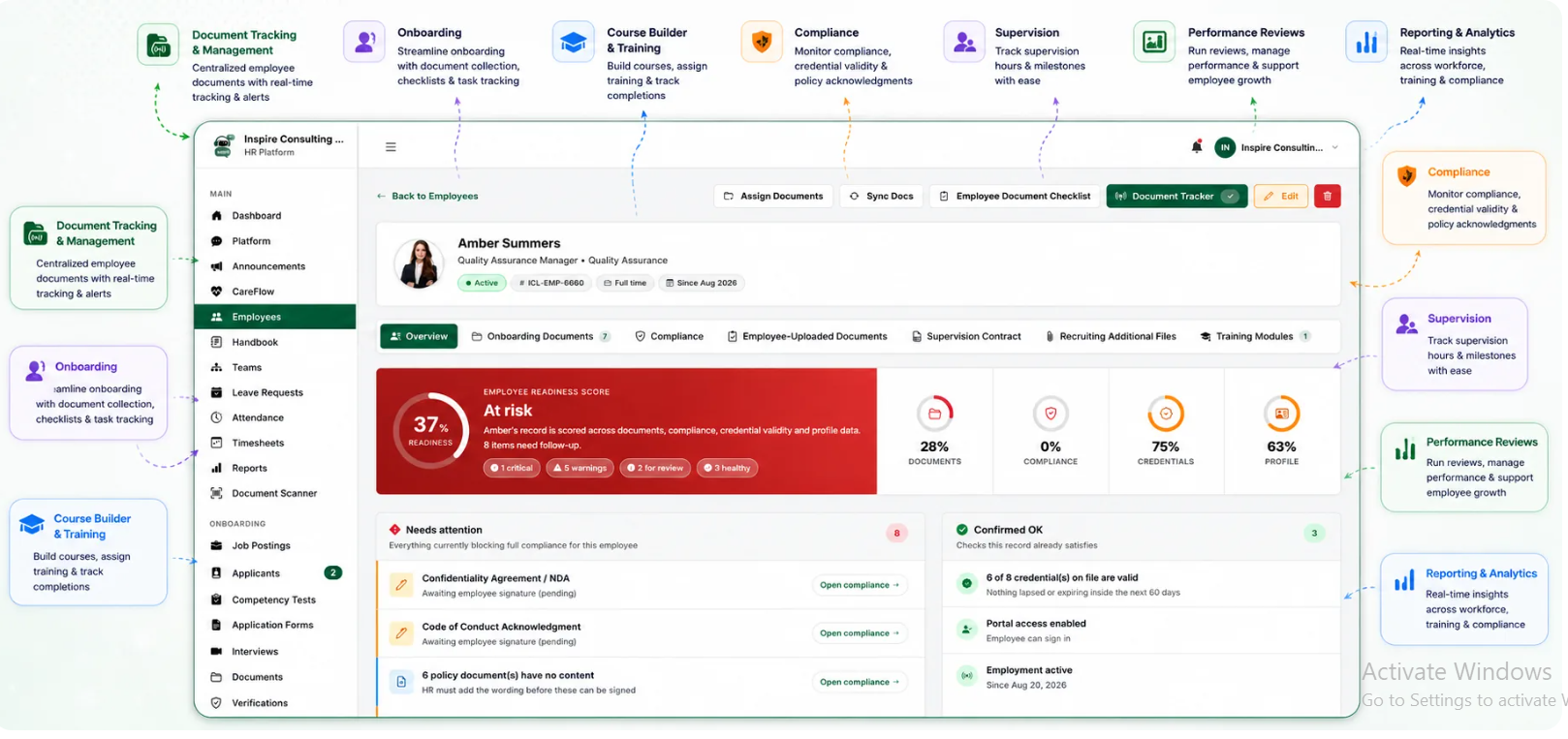
BUAMS HR helps behavioral health providers keep workforce documentation organized across hiring, onboarding, and employee file management. Instead of treating reference checks as a disconnected prehire task, teams can support a more structured workflow that keeps key hiring steps visible and tied to the broader HR process.
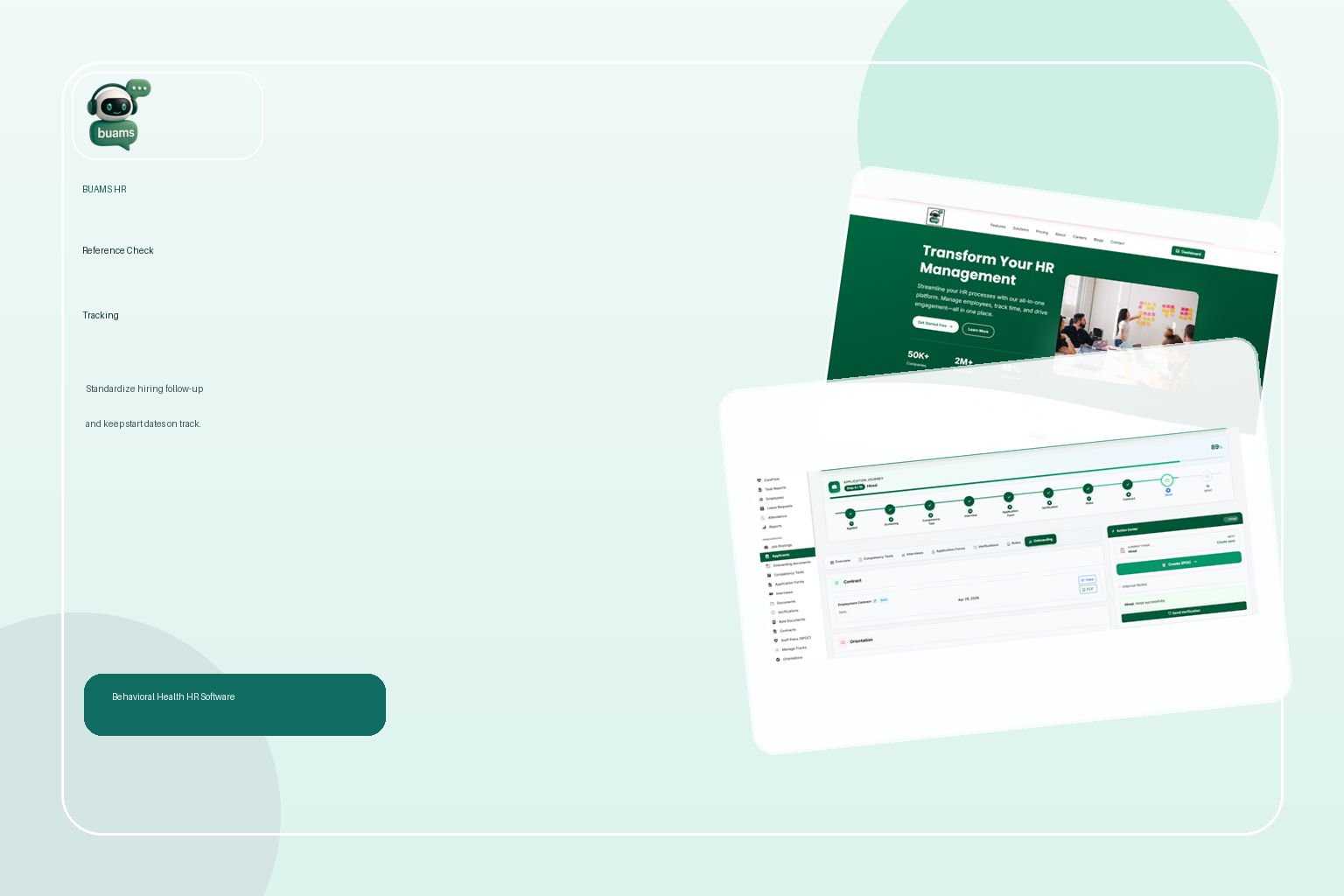
That matters when a completed reference check needs to trigger the next action. HR may need to prepare onboarding documents, confirm a start date, collect additional employee records, or coordinate with supervisors and program leaders. BUAMS HR gives organizations a centralized environment to manage those transitions with less manual follow-up and less risk of missing documentation.
For multi-site or fast-growing providers, BUAMS HR also improves consistency. Teams can organize hiring-related records more reliably, reduce fragmented handoffs, and maintain a clearer trail of workforce documentation from candidate readiness through active employment.
Final Thoughts
Reference check tracking software helps behavioral health providers bring more structure to a hiring step that is often handled informally. With a standardized process, HR teams can reduce delays, improve documentation quality, and move qualified hires into onboarding with more confidence.
For organizations that want cleaner hiring workflows and better continuity between prehire steps and employee records, BUAMS HR offers a practical way to keep those processes aligned in one system.