Behavioral health providers often rely on interns, practicum students, and other trainees to support service delivery pipelines, strengthen recruiting, and expand supervisory capacity over time. But the administrative side of those placements can get messy fast. HR teams may be juggling university affiliation agreements, background documentation, health records, supervisor assignments, site readiness, and start-date approvals in multiple inboxes and spreadsheets. School affiliation tracking software gives organizations a more reliable way to keep those moving parts organized without losing compliance control.
For behavioral health providers, the risk is not just inconvenience. A missing agreement, expired clearance, or unconfirmed supervisor assignment can delay a student start date, create confusion across programs, or expose the organization during an audit or placement review. A structured workflow helps HR and operations teams keep school partnerships moving while making sure each placement is properly documented.
Key Takeaways
What Is School Affiliation Tracking Software?
School affiliation tracking software is a structured system for managing the administrative and compliance steps tied to academic partnerships and trainee placements. In behavioral health settings, that often includes graduate counseling interns, social work students, psychology trainees, peer support trainees, and other learners who need documented approval before they can begin work at a site.
Instead of tracking each relationship through scattered files, the software gives teams a repeatable way to manage partner schools, agreement terms, required forms, supervisor capacity, site assignments, and placement timelines. That matters because a placement usually depends on multiple approvals that must line up at the same time, not just one signed document.
Why It Matters for Behavioral Health Providers
Behavioral health organizations often operate across several programs, sites, and service models. One clinic may be ready to take a trainee while another is at supervisory capacity. One school may require additional documentation before a student can start, while another may use a different renewal cycle for affiliation agreements. Without a dependable tracking process, teams waste time chasing updates and risk placing students before every requirement is fully confirmed.
A weak process can create several avoidable problems. Students may arrive before access, orientation, or documentation is complete. Supervisors may be assigned beyond reasonable capacity. Agreement renewal dates may slip by unnoticed. Program leaders may assume HR is handling a task that is actually sitting with a site manager or school coordinator. These issues can hurt partner relationships and create avoidable stress right when new placements should be starting smoothly.
School affiliation tracking software improves visibility across those handoffs. It helps organizations answer practical questions quickly: Which schools have active agreements? Which students are cleared to begin? Which sites still need supervisor confirmation? Which placements are waiting on immunization proof, background checks, or orientation steps? That visibility is valuable for both day-to-day execution and long-term planning.
What to Track in a Strong Placement Workflow
Not every provider needs the same level of complexity, but the most effective placement workflows usually track a core set of operational details in a consistent format.
1. School and agreement records
Each partner school should have a clear record showing agreement status, expiration or renewal timing, program contacts, required forms, and any special terms tied to placement volume or supervision expectations. This reduces the risk of launching a placement under an outdated or incomplete agreement.
2. Student document readiness
HR teams should be able to see whether required items are complete for each student. That may include identification, onboarding forms, confidentiality acknowledgments, immunization records, background documentation, role-specific attestations, and any school-specific paperwork. The goal is to avoid last-minute surprises right before the planned start date.
3. Supervisor assignment and capacity
Placement readiness depends on more than student paperwork. A qualified supervisor must be available, correctly assigned, and aware of the placement timeline. Tracking supervisor capacity helps prevent over-assignment and gives leadership a clearer view of where placements can realistically be supported.
4. Site, program, and schedule details
For multi-site behavioral health providers, the placement record should reflect where the student will work, which program they support, the expected start and end dates, and any site-specific readiness items. This helps HR align the right documents, contacts, and onboarding steps to the right location.
5. Approval checkpoints and audit proof
A strong workflow should show who reviewed what, what is still pending, and when the placement was cleared. That creates a defensible record if the organization needs to respond to a school inquiry, internal review, or compliance audit later.
Common Warning Signs That the Process Needs Work
Many providers do not realize they need school affiliation tracking software until placements start slipping. A few warning signs usually show up first.
When these issues repeat, the problem is usually not effort. It is lack of a shared system. Teams are working, but they are working without enough visibility, ownership, or structure.
Best Practices for Behavioral Health Organizations
Providers do not need a complicated academic affairs platform to improve placement operations. They need a process that is standardized, visible, and easy to maintain.
Start by using one placement record per student or trainee instead of splitting information across multiple trackers. Define a standard checklist for documents, approvals, and readiness steps. Make responsibility visible so HR, supervisors, and site leaders know exactly who owns the next action. Add reminders for agreement renewals and upcoming placement start dates. Finally, keep supporting files attached to the placement record so the organization can respond quickly when a school or auditor asks for proof.
It also helps to separate required steps from optional notes. If everything is treated like a comment in email, the team cannot reliably tell what is complete. Structured statuses such as pending, in review, approved, and ready to start make the workflow far easier to manage.
How BUAMS HR Helps
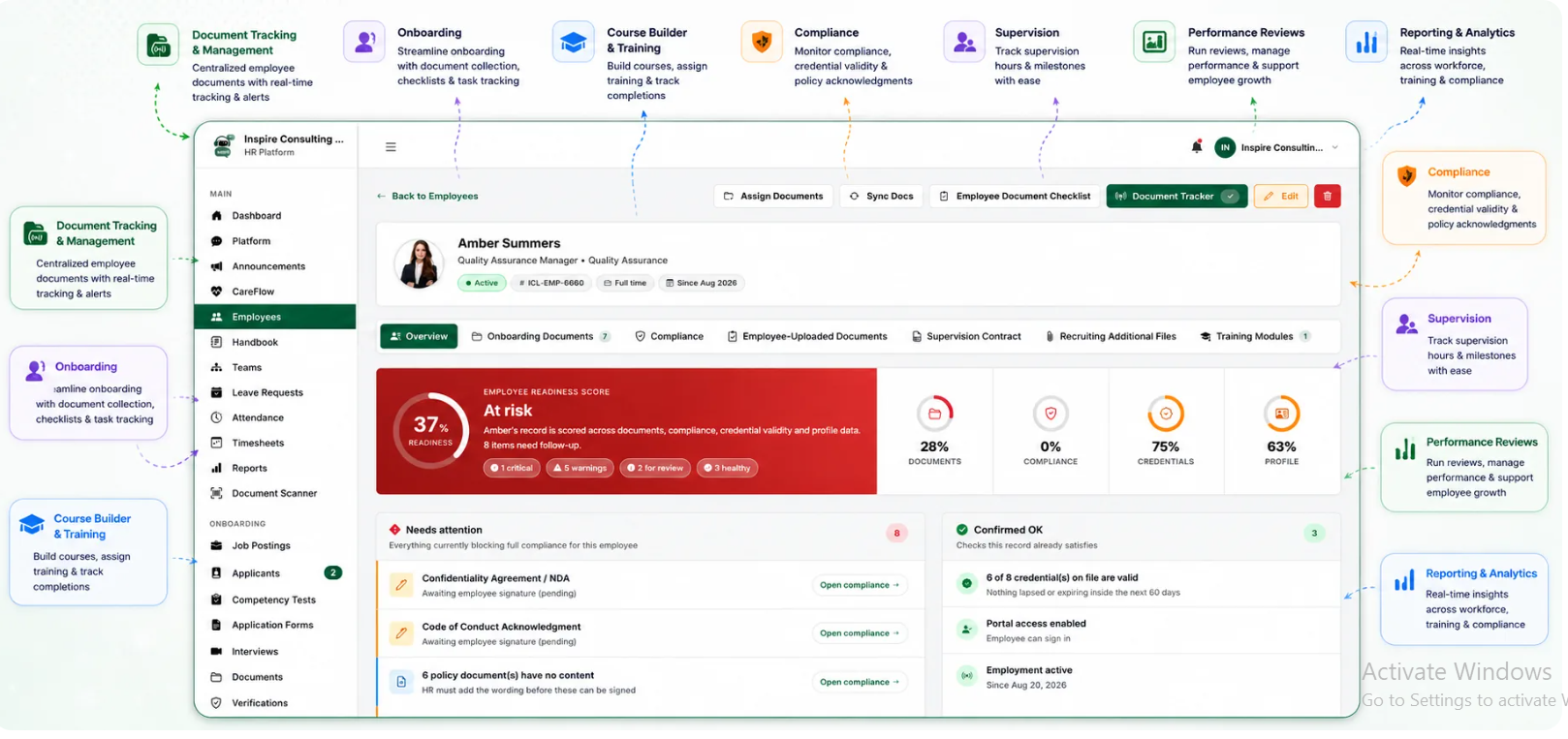
BUAMS HR can help behavioral health providers bring placement administration into a cleaner, more accountable process. Instead of relying on disconnected spreadsheets, teams can keep trainee records, document status, and supporting files together in one place. That makes it easier to review readiness before a student begins work and easier to prove what was completed later.
With a centralized HR workflow, organizations can track which documents are still missing, attach school-specific forms to the right record, monitor upcoming deadlines, and keep supervisor or site approvals visible. Leadership can also get a clearer picture of where placements are active, where capacity is limited, and where follow-up is needed before the next cohort starts.
The real value is consistency. When each placement moves through the same documented process, HR spends less time reconstructing status updates and more time keeping partnerships responsive and compliant.
Final Thoughts
School affiliation tracking software is not just about organizing paperwork. For behavioral health providers, it supports smoother academic partnerships, more confident placement readiness, and better visibility across HR, supervisors, and site operations. When organizations standardize how they manage agreements, student requirements, and approvals, they reduce preventable delays and create a stronger experience for both internal teams and partner schools.
As trainee programs grow, structure matters. A documented workflow helps behavioral health organizations scale placements without sacrificing compliance, communication, or start-date confidence.