Behavioral health providers often need a better way to assign recurring shifts than back-and-forth emails, spreadsheet swaps, and informal manager memory. As organizations grow across programs, sites, and service lines, schedule bidding becomes harder to manage fairly. Teams need to consider employee preferences, coverage needs, role requirements, overtime exposure, supervision availability, and qualification rules at the same time. That is difficult to do consistently without a structured process.
Shift bid management software helps behavioral health organizations run cleaner schedule selection cycles by organizing employee preferences, documenting approvals, and applying workforce rules before the final roster is locked. Instead of treating recurring schedule assignments like a manual negotiation, HR and operations leaders can use a defined workflow that improves fairness, visibility, and compliance.
Key Takeaways
What Is Shift Bid Management Software?
Shift bid management software is a system used to run recurring or event-based schedule selection in an organized, trackable way. Employees submit preferred shifts or patterns, managers review requests against staffing needs and policy rules, and the organization documents the final outcome in one place.
In behavioral health environments, shift bidding is rarely just about preference. Providers may need to confirm whether an employee is approved for a certain site, trained for a specific program, current on required documents, or assigned to the right supervisor ratio before placing them into a schedule slot. A manual process can overlook those dependencies, especially when leaders are trying to move quickly.
Why It Matters for Behavioral Health Providers
Recurring schedule assignment decisions can influence morale as much as pay or recognition. If employees believe preferred shifts are granted inconsistently, trust erodes fast. That can lead to avoidable grievances, manager friction, and retention problems. In a field already dealing with coverage pressure, those problems spread quickly.
Behavioral health providers also face an operational challenge that many other employers do not. A shift cannot be treated as interchangeable when one role requires a licensed clinician, another needs bilingual capability, and another requires a supervisor physically or virtually available for oversight. Schedule bidding must account for more than who asked first. It has to account for who is eligible and what coverage risk the organization can safely accept.
That is why a repeatable, transparent process matters. With the right software, providers can show that schedule decisions followed established rules rather than informal exceptions or inconsistent manager habits.
What to Look for in Shift Bid Management Software
Preference Collection With Deadlines
The process should start with a clear submission window. Employees need an easy way to state preferred shifts, unavailable times, and relevant notes. HR and operations teams need confidence that requests were submitted on time and captured consistently.
Eligibility and Qualification Checks
Not every open slot should be available to every employee. Look for a workflow that can support assignment rules tied to credentials, site approvals, training completion, language capability, supervisor structure, or role type. That helps prevent bidding results that create compliance or service delivery problems later.
Fairness and Policy Visibility
Organizations often apply rules involving seniority, rotating priority, minimum coverage commitments, or restrictions on consecutive shifts. Good software makes those rules easier to apply and easier to explain. That transparency reduces disputes after the schedule is published.
Manager Review and Exception Handling
Sometimes a bid result needs an exception because of program demand or employee readiness issues. The system should support documented reviews, notes, and approvals so overrides do not happen invisibly or without accountability.
Audit-Friendly Decision History
When an employee questions a recurring assignment, the organization should be able to show what was requested, what rules were considered, and who approved the final decision. A decision trail protects managers and gives HR a stronger fact base when resolving disputes.
A Practical Shift Bid Workflow
A practical workflow begins by publishing the shift set, bidding window, and decision rules in advance. Employees submit preferences in one standard format rather than through direct messages or hallway conversations. Once the window closes, managers review results with visibility into eligibility factors that may affect placement.
For example, a provider may need to balance evening program coverage across multiple sites while ensuring that at least one properly credentialed employee is available in each location. Another team may need to prevent an employee with an expired training item from landing in a shift that requires that qualification. A strong system helps decision-makers catch those issues before assignments are finalized instead of after the schedule has already been posted.
After review, the final schedule should be published with documentation of exceptions, unresolved gaps, and next-step actions if any employee still needs training, supervision alignment, or site clearance. That closes the loop between schedule planning and workforce readiness.
How BUAMS HR Helps
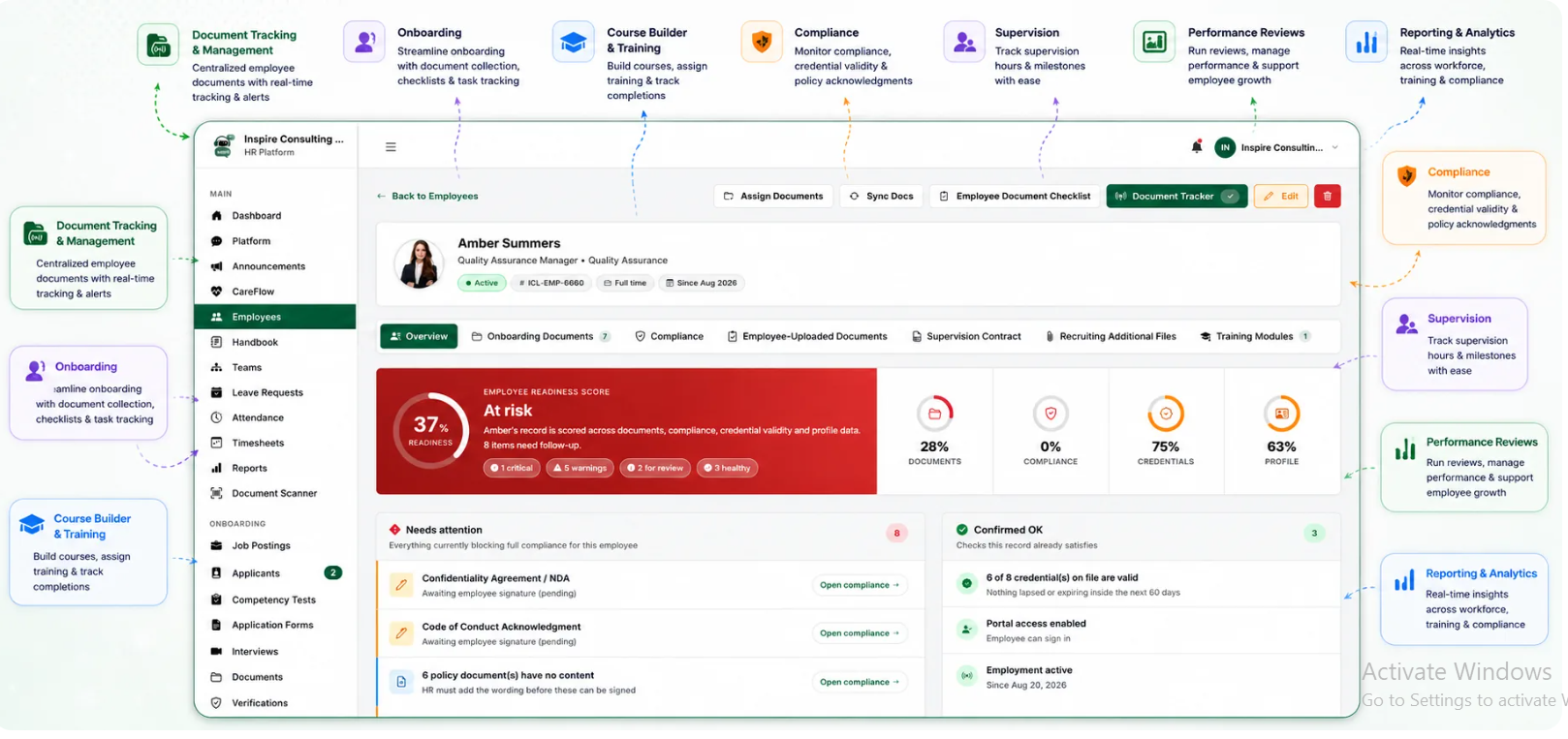
BUAMS HR helps behavioral health providers keep workforce operations more organized by connecting employee records, documentation status, and role readiness in one environment. That foundation matters when schedule-related decisions depend on more than basic availability.
For shift bid management, BUAMS HR can support cleaner HR and operational coordination by keeping employee information, required records, and follow-up tasks easier to review in context. Teams can work from a more consistent source of workforce data instead of piecing together decisions from separate spreadsheets, inboxes, and local notes.
As providers expand across programs or locations, that consistency becomes more valuable. BUAMS HR helps organizations create repeatable workforce processes that are easier to monitor, easier to standardize, and easier to defend when employees have questions about how assignments were made.
Final Thoughts
Shift bid management software gives behavioral health providers a more reliable way to balance employee preferences with coverage realities and workforce rules. It can reduce schedule disputes, improve transparency, and help leaders avoid preventable assignment mistakes that create downstream staffing risk.
For organizations trying to strengthen fairness without losing control of qualifications and compliance, a structured shift bidding workflow is a smart operational upgrade. When the process is documented and connected to employee readiness data, schedule decisions become faster, clearer, and easier to trust.