Behavioral health providers often need more staffing flexibility than their org charts suggest. A clinician may need to support a second program during a vacancy. A residential team may need backup staff who can step into a different shift pattern. A growing organization may want to reduce overtime by preparing employees to handle adjacent responsibilities instead of relying on the same small group of people every time coverage gets tight. The challenge is that cross-training can quickly become informal. Teams may know that someone was shown a task once, but not whether that employee is fully prepared, currently approved, or still aligned with the right documentation. Staff cross-training tracking software gives HR and operations a more reliable way to manage that readiness.
That matters in behavioral health because coverage decisions affect service continuity, supervision, compliance, and employee confidence. Cross-training is helpful only when organizations can prove who is ready for what, what still needs review, and where role boundaries begin and end. Without that visibility, leaders risk assigning work based on assumptions rather than documented readiness.
Key Takeaways
What staff cross-training tracking software should solve for behavioral health HR teams
Good staff cross-training tracking software should do more than record that an employee attended a session. It should help organizations define the skills or workflows involved, show whether the employee has completed the right preparation, and support follow-up when readiness changes over time.
Why cross-training gets difficult in behavioral health settings
Behavioral health organizations often depend on adaptability. Programs shift, census changes, leaves happen, and hiring timelines do not always line up with service demand. Cross-training can help teams stay resilient, but only if it is managed with enough structure to protect both care quality and workforce accountability.
In many organizations, cross-training starts with a good intention and then becomes hard to track. One supervisor may keep notes in a spreadsheet. Another may rely on email approvals. A third may assume that once an employee helped in another setting, that person is permanently ready to do it again. Over time, the organization loses confidence in who is actually prepared, whether training expectations were consistent, and whether certain assignments need updated review.
This becomes especially important when cross-training touches regulated workflows, documentation standards, medication-adjacent responsibilities, or supervisory expectations. Even when a task is operationally simple, behavioral health providers still need consistency in how readiness is documented and communicated.
Best practices for using staff cross-training tracking software effectively
The best cross-training workflows help organizations build flexibility without creating role confusion. They give managers more options during staffing pressure while keeping the rules visible and defensible.
Define cross-training by task or responsibility, not by assumption
Cross-training should be specific. Saying that an employee is “trained” is not enough if no one can see what that actually means. Strong workflows break readiness into clear categories that managers can review quickly.
Connect cross-training to supervision and refreshers
Cross-training is not always permanent. An employee who learned a secondary workflow months ago may need a refresher before stepping back into it, especially if procedures, systems, or documentation expectations changed. Software should make that easy to see.
Use readiness data to improve workforce planning
Cross-training data is useful beyond the immediate staffing question. It helps leaders see whether coverage flexibility is concentrated in a few people or distributed across the organization. That visibility can reduce burnout risk and help teams plan development more intentionally.
What to look for in staff cross-training tracking software
Behavioral health providers need tools that support flexibility without making role readiness harder to understand. The most useful cross-training systems give HR, supervisors, and leadership a shared view of what has been completed and what still needs attention.
When those elements are in place, staff cross-training tracking software becomes more than a recordkeeping tool. It becomes a practical way to build operational resilience while protecting consistency and oversight.
How BUAMS HR helps behavioral health organizations keep cross-training readiness organized
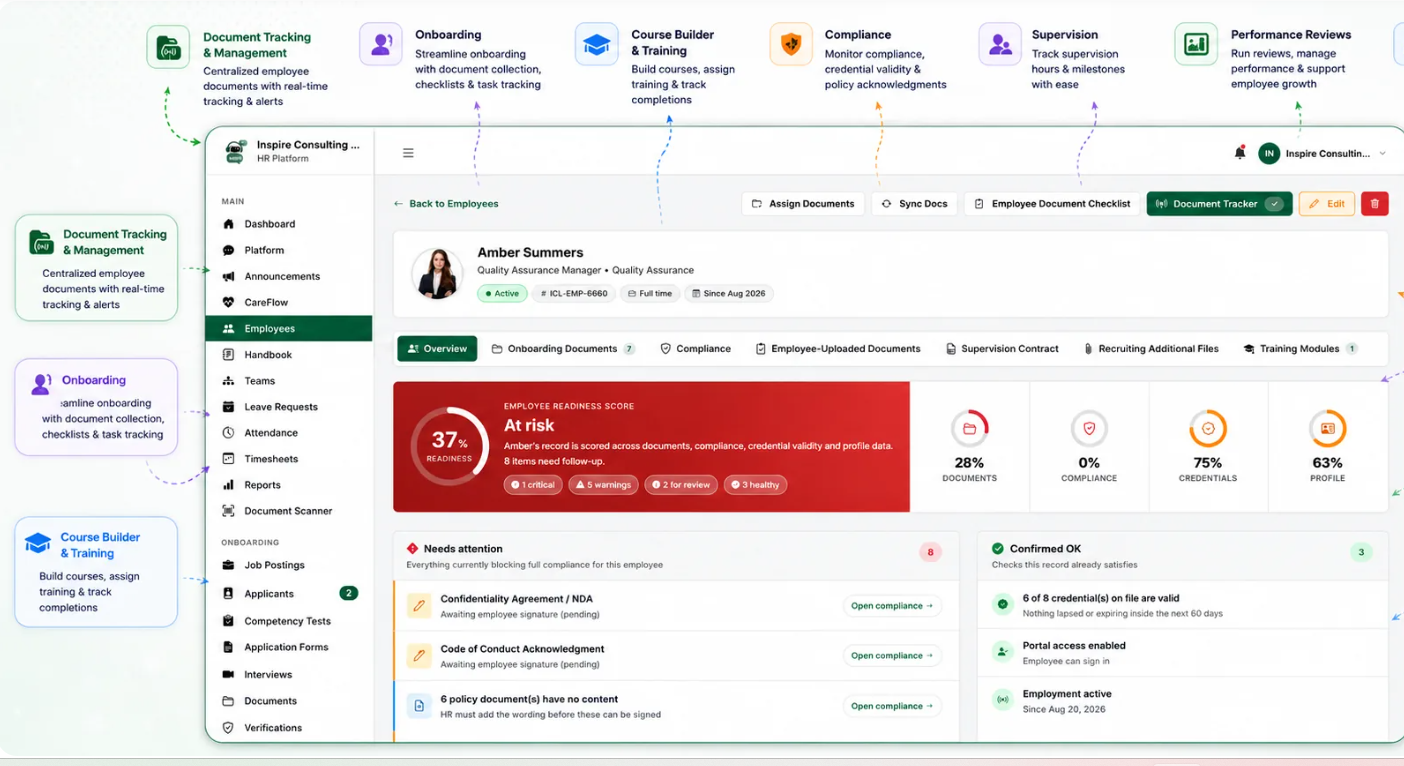
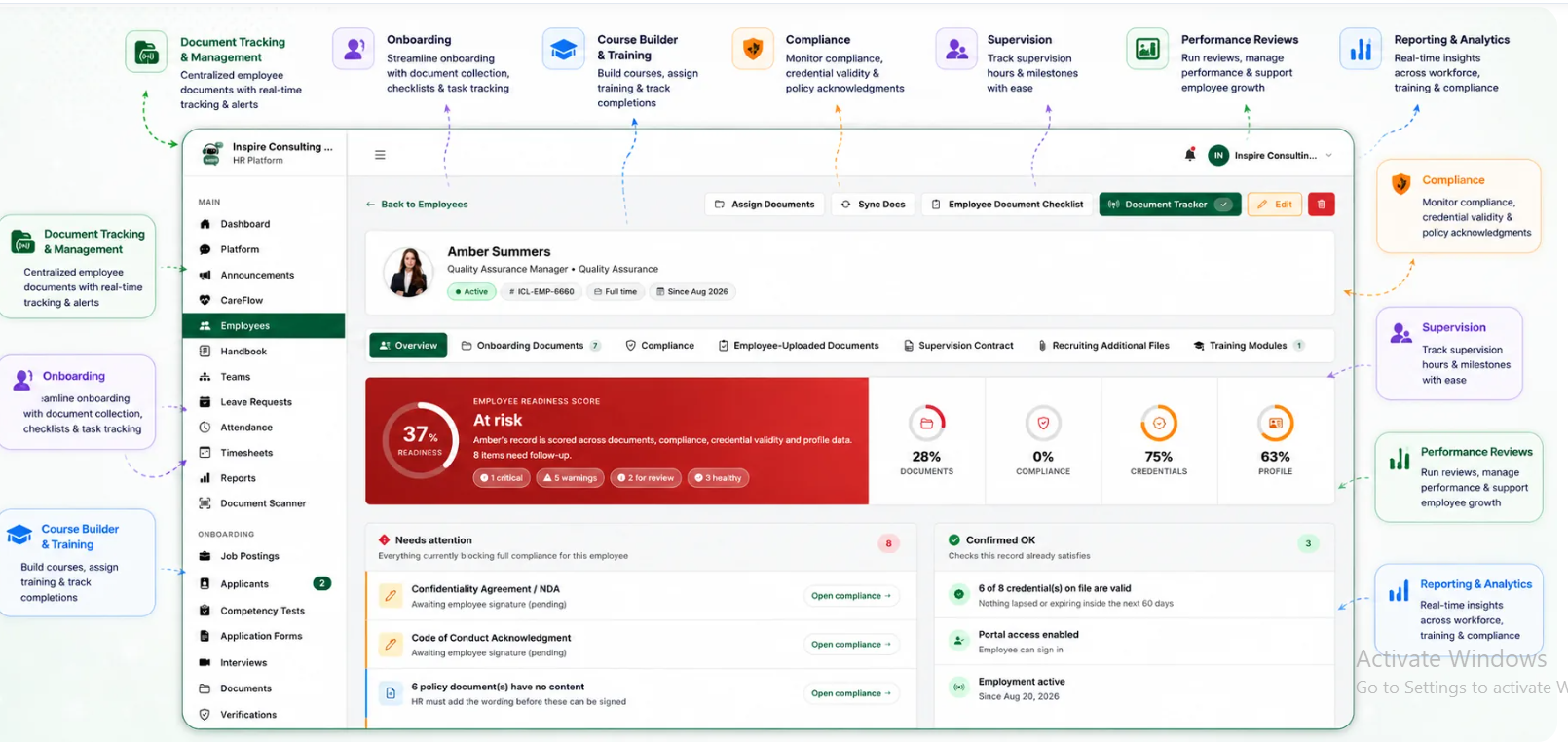
BUAMS HR helps behavioral health providers keep workforce information better connected so training status, employee records, approvals, and follow-up are easier to review in one place. That makes it simpler to support staffing flexibility without relying on disconnected trackers or memory-based decisions.
For organizations trying to balance flexibility with accountability, that structure matters. Teams can prepare employees for broader support roles while maintaining cleaner records and stronger confidence in who is ready for what.
Final thoughts
Staff cross-training tracking software gives behavioral health HR teams a practical way to expand coverage options without losing role clarity or documentation control. By defining readiness clearly, tracking approvals, and reviewing coverage depth over time, providers can build a more resilient workforce while supporting compliance-aware operations. For organizations that want fewer staffing surprises and better visibility into backup readiness, a stronger cross-training process is a smart investment.