
Connecting Care Delivery With Workforce Strategy
Staff plans of care and HR operations are often managed separately, but in regulated environments, they are deeply connected. In Washington DC, behavioral health organizations, healthcare providers, and community-based services rely on coordinated care delivery that depends on a well-structured workforce.
When staff plans of care align with HR systems, organizations achieve better coordination, improved compliance, and stronger outcomes. This synergy ensures that the right professionals are assigned, documentation is accurate, and care delivery remains consistent.
Understanding Staff Plans of Care in Regulated Environments
Staff plans of care outline how services are delivered to clients or patients. They define roles, responsibilities, timelines, and documentation requirements. In behavioral health settings, these plans are essential for maintaining treatment quality and regulatory compliance.
At the same time, HR systems manage staffing, credentials, scheduling, and performance.
When these two areas operate independently, gaps can appear. Misaligned schedules, missing documentation, or unqualified assignments can impact care quality.
Integrating staff plans of care with HR systems creates a unified approach where workforce management directly supports care delivery.
Improving Workforce Coordination
Effective care depends on having the right staff available at the right time. Without alignment between care plans and workforce scheduling, organizations may experience delays or inconsistencies.
HR synergy ensures that staffing assignments match care requirements. Schedules are aligned with treatment plans, and staff availability is clearly tracked. This coordination improves efficiency and reduces confusion across teams.
In Washington DC’s regulated care environments, this level of organization supports both
operational performance and service quality.
Strengthening Compliance and Documentation
Compliance is a critical concern for organizations delivering care-based services. Staff plans
of care must meet strict documentation standards, and HR systems must ensure that staff are qualified and properly supervised.
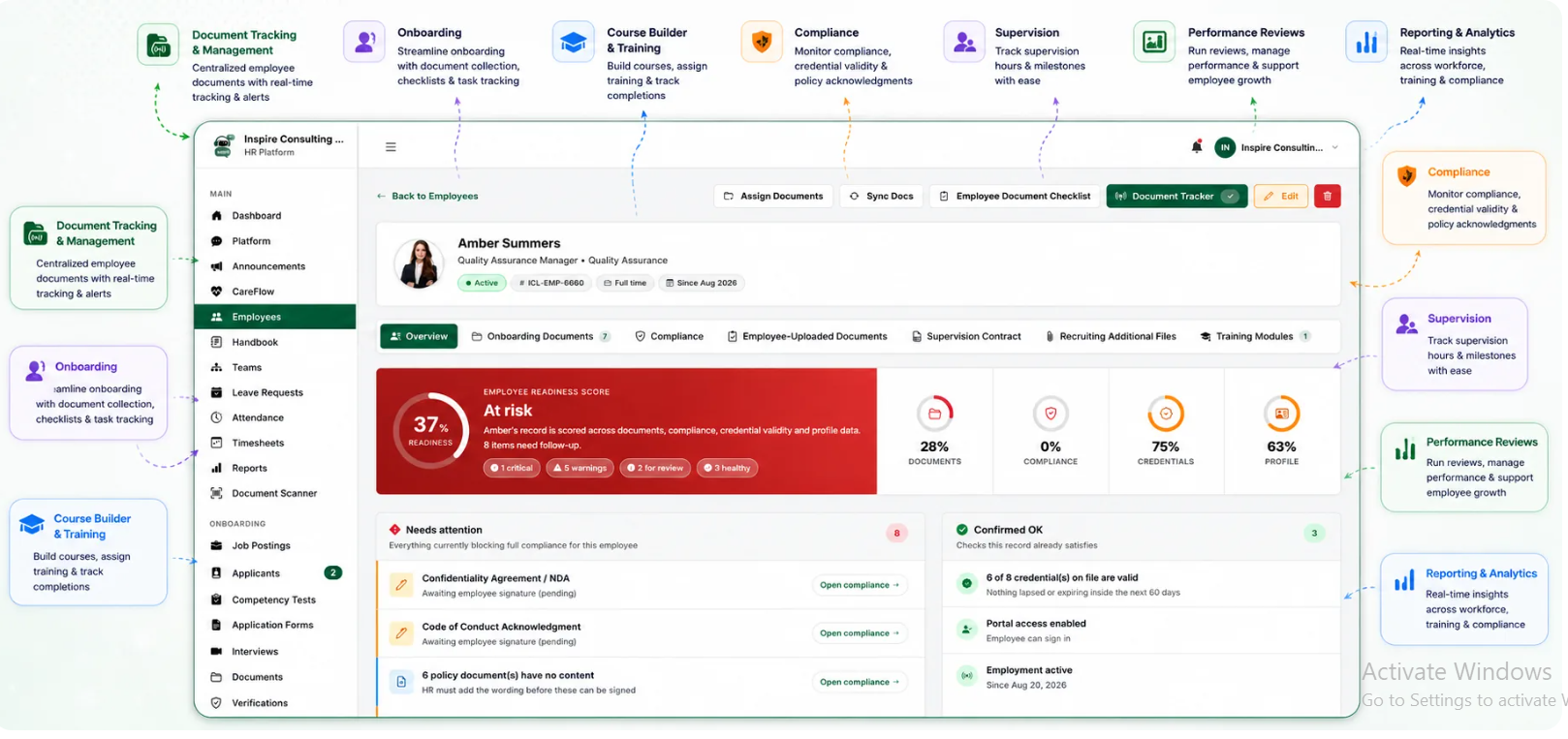
When these systems are integrated, compliance becomes more manageable. Credential tracking, supervision logs, and documentation requirements are connected within a single framework.
This reduces the risk of errors and ensures that all aspects of care delivery meet regulatory expectations. Organizations remain audit-ready without additional administrative burden.
Enhancing Accountability Across Teams
Clear accountability is essential for both HR and care delivery. When roles and responsibilities are not aligned, tasks may be missed or duplicated.
Synergy between staff plans of care and HR systems creates clear accountability. Each team member understands their responsibilities, and leadership can track performance and compliance in real time.
This clarity improves communication and reduces operational inefficiencies.
Supporting Behavioral Health Professionals
Behavioral health professionals operate in high-demand environments where clarity and structure are essential. Complex documentation requirements and shifting schedules can create stress.
When HR systems support care plans directly, professionals experience smoother workflows. They can focus more on client care rather than administrative tasks.
This improved experience contributes to better job satisfaction, reduced burnout, and stronger retention within Washington DC organizations.
Enabling Real-Time Workforce Visibility
Leadership teams need visibility into both workforce operations and care delivery. Without integrated systems, gaining this insight can be time-consuming.
HR synergy provides real-time dashboards that connect staffing data with care plan requirements. Leaders can quickly identify gaps, monitor compliance, and ensure that care delivery aligns with organizational standards.
This visibility supports faster decision-making and proactive management.
Reducing Administrative Complexity
Managing separate systems for HR and care planning increases administrative workload. Staff must duplicate data entry, track information manually, and reconcile inconsistencies.
Integrated HR solutions reduce this complexity by centralizing data. Information flows seamlessly between workforce management and care planning functions.
This reduces errors, saves time, and allows organizations to operate more efficiently.
Aligning Workforce Strategy With Client Outcomes
The ultimate goal of staff plans of care is to improve client outcomes. HR systems play a critical role in achieving this goal by ensuring that qualified and well-supported staff deliver services.
When HR strategy aligns with care delivery, organizations can better match staff skills with client needs. This alignment improves service quality and strengthens overall performance.
For Washington DC organizations, this connection between workforce and outcomes is essential for long-term success.
Supporting Organizational Growth and Scalability
As organizations grow, maintaining alignment between staff plans of care and HR systems becomes more challenging. New programs, additional clients, and expanded teams increase complexity.
Integrated systems scale alongside the organization. They maintain consistency in processes and ensure that workforce management continues to support care delivery effectively.
This scalability allows organizations to expand services without compromising quality or compliance.
Building a Unified Operational Framework
Synergy between staff plans of care and HR systems creates a unified operational framework. Instead of working in silos, teams operate within a connected system that supports both workforce management and service delivery.
This integration strengthens communication, improves efficiency, and reduces risk.
Leadership gains a comprehensive view of operations, enabling better planning and oversight.
The Long-Term Value of HR and Care Alignment
Organizations that align staff plans of care with HR systems experience long-term benefits.
These include improved compliance, stronger workforce coordination, reduced administrative burden, and enhanced service quality.
This alignment transforms HR from a support function into a strategic partner in care delivery.
In Washington DC’s regulated environment, this strategic approach provides a competitive advantage and supports sustainable growth.
Final Thoughts on Staff Plans of Care & HR Synergy
Staff plans of care and HR systems are most effective when they work together. By creating synergy between these functions, organizations improve coordination, strengthen compliance, and enhance workforce performance.
For Washington DC behavioral health providers and regulated organizations, this integration is essential for delivering consistent, high-quality services while maintaining operational efficiency.
A unified approach to workforce management and care planning is not just an operational improvement. It is a foundation for better outcomes, stronger teams, and long-term organizational success.