Behavioral health organizations change reporting lines more often than many HR teams expect. A clinician may move under a new program director, a case manager may transfer to another location, or an intake employee may start receiving day-to-day oversight from a different supervisor during a coverage shift. When those changes are handled informally, the organization can lose track of who owns evaluations, who signs off on training, who reviews corrective actions, and who should be notified when a credential or compliance item needs attention.
Supervisor change tracking software gives behavioral health providers a more reliable way to document those handoffs and keep employee oversight aligned with real-world operations. Instead of relying on email chains or verbal updates, HR teams can create a structured record of when a supervisor change happened, which workflows it affects, and what follow-up actions must be completed. That matters for providers operating across multiple programs, locations, or service models where accountability needs to stay clear even as teams evolve.
Key Takeaways
What Supervisor Change Tracking Software Covers
Supervisor change tracking software helps HR teams record and manage updates to who is responsible for overseeing an employee. In behavioral health settings, that may include clinical supervisors, program managers, operations leads, or department heads who are responsible for approvals, check-ins, performance reviews, training follow-up, and documentation oversight.
The software should do more than log that a new name was assigned. It should connect the change to effective dates, locations, departments, programs, and the downstream tasks that depend on accurate supervision data. For example, when a therapist moves to a new team, the organization may need to update review assignments, re-route approval workflows, notify compliance staff, and make sure future reminders reach the right supervisor.
Without a structured process, supervisor changes tend to create quiet breakdowns. A performance checkpoint gets missed because the old manager still appears in the spreadsheet. A training escalation goes to the wrong inbox. A corrective action review sits unaddressed because no one is certain who now owns the employee relationship. These issues are easy to overlook until a larger compliance or employee-relations problem appears.
Why Supervisor Changes Create Operational Risk
Behavioral health organizations often experience supervisor changes during growth, turnover, leave coverage, internal promotions, and program restructuring. Those shifts may happen quickly, but the related documentation responsibilities do not disappear. If the HR system is not updated promptly, oversight tasks can remain tied to the wrong person for weeks.
This becomes especially risky when supervision is linked to regulated or high-accountability work. Supervisors may be expected to confirm onboarding completion, monitor annual requirements, participate in disciplinary steps, support accommodation follow-up, or review readiness for client-facing responsibilities. If the organization cannot clearly show who held supervisory responsibility at a given time, it becomes harder to prove that oversight was timely and appropriate.
The problem is not limited to permanent org-chart changes. Temporary supervisory coverage can create the same confusion if interim assignments are not documented with clear start dates, end dates, and scope. A provider may think it has solved a staffing gap, while HR and compliance still do not know who should receive reminders or approve pending actions during the transition.
What to Look for in Supervisor Change Tracking Software
Effective-Dated Supervisor History
Behavioral health providers should be able to see not only the current supervisor, but also when the change took effect and who held responsibility before. Effective-dated history helps organizations answer practical questions later if they need to review a missed evaluation, a delayed follow-up, or an employee concern.
Workflow Triggers for Downstream Updates
A supervisor change should not be treated as a static profile edit. The best systems can trigger related actions such as notifying HR, updating approval paths, prompting document review, or alerting teams that scheduled check-ins may need reassignment.
Support for Interim and Shared Oversight
Some behavioral health environments rely on temporary coverage, matrixed reporting, or dual oversight between administrative and clinical leaders. Good software should help teams reflect those realities without losing clarity about primary accountability.
Visibility Across Programs and Locations
Multi-site providers need a simple way to confirm where an employee sits, which program they support, and which leader is currently responsible. That visibility matters when staffing changes happen across Maryland, DC, or multiple service lines with different operating structures.
Audit-Friendly Documentation
Organizations should be able to show when a supervisor change was entered, who approved it if approval is required, and what related updates were completed. A clean record supports internal governance and reduces reliance on memory when questions come up later.
Best Practices for Managing Supervisor Changes
How BUAMS HR Helps Behavioral Health Providers
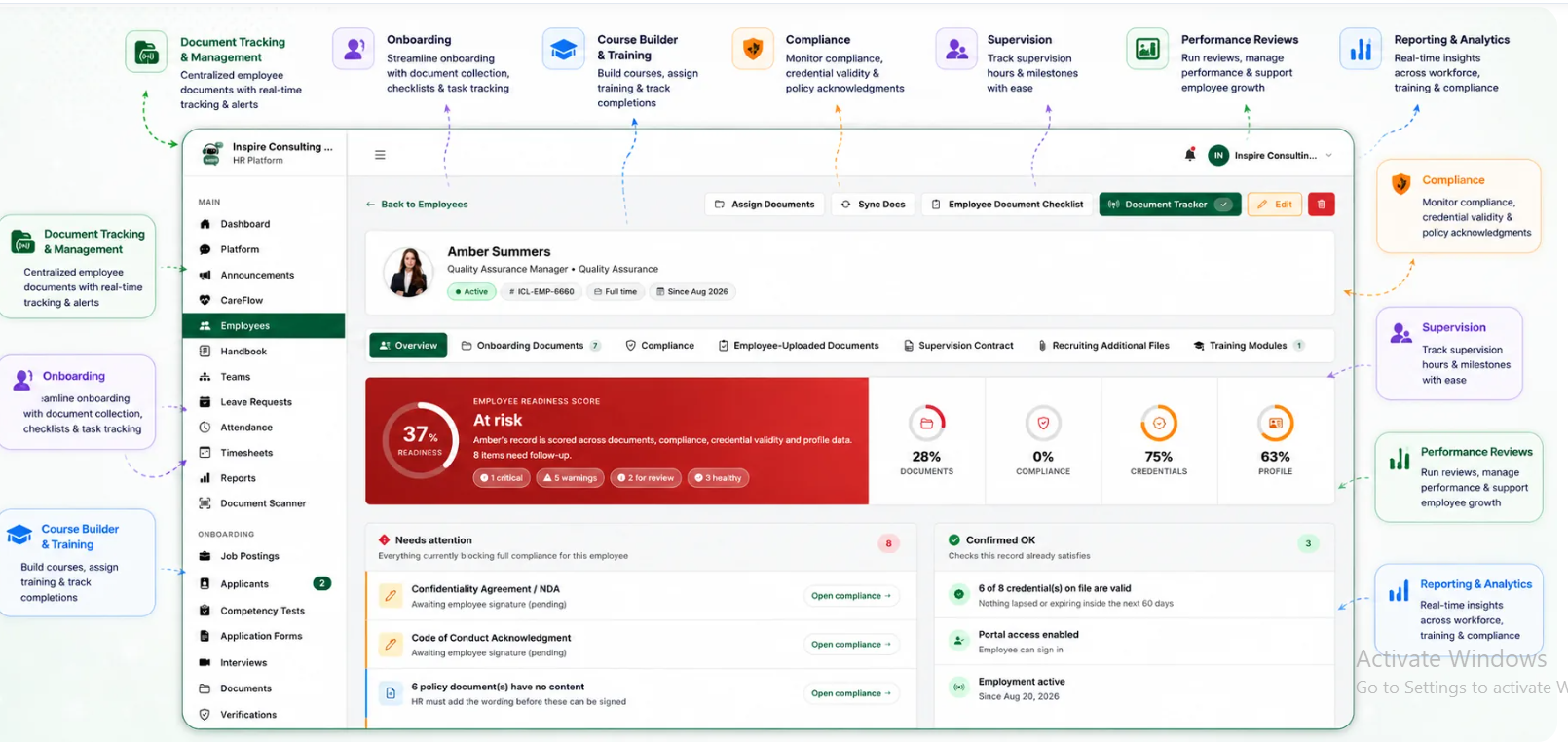
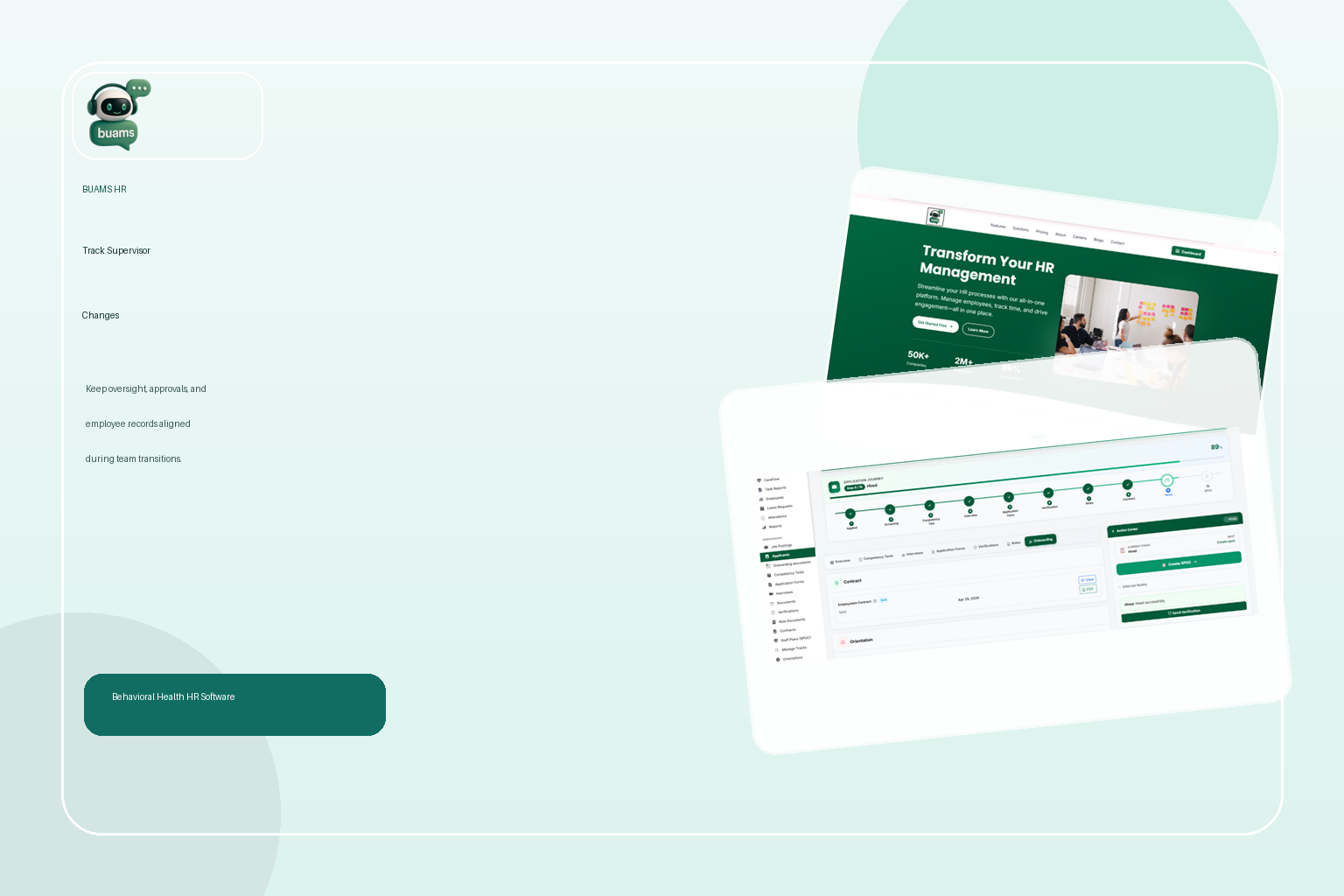
BUAMS HR helps behavioral health organizations maintain cleaner workforce records so management changes do not disappear into informal communication. When employee information, compliance tasks, and HR documentation live in one system, teams have a stronger foundation for keeping supervisory accountability aligned with current operations.
For providers managing multiple programs or frequent staffing adjustments, BUAMS HR supports a more organized way to track employee relationships, update records, and preserve oversight history. That helps reduce confusion around who should receive follow-up items, who owns performance documentation, and who needs visibility into open compliance issues after a team change.
Because behavioral health providers often balance operational flexibility with strict documentation expectations, a centralized HR platform makes supervisor transitions easier to manage without sacrificing clarity. Teams can move faster during reorganizations or coverage changes because the handoff process is visible and easier to verify.
Final Thoughts
Supervisor changes may look minor on the surface, but they can affect employee oversight, compliance follow-up, and accountability across the organization. Supervisor change tracking software helps behavioral health providers turn those updates into a documented process instead of a hidden risk.
For teams that want cleaner handoffs, better oversight continuity, and stronger employee records, BUAMS HR offers a practical way to keep supervisory changes organized as the organization grows.