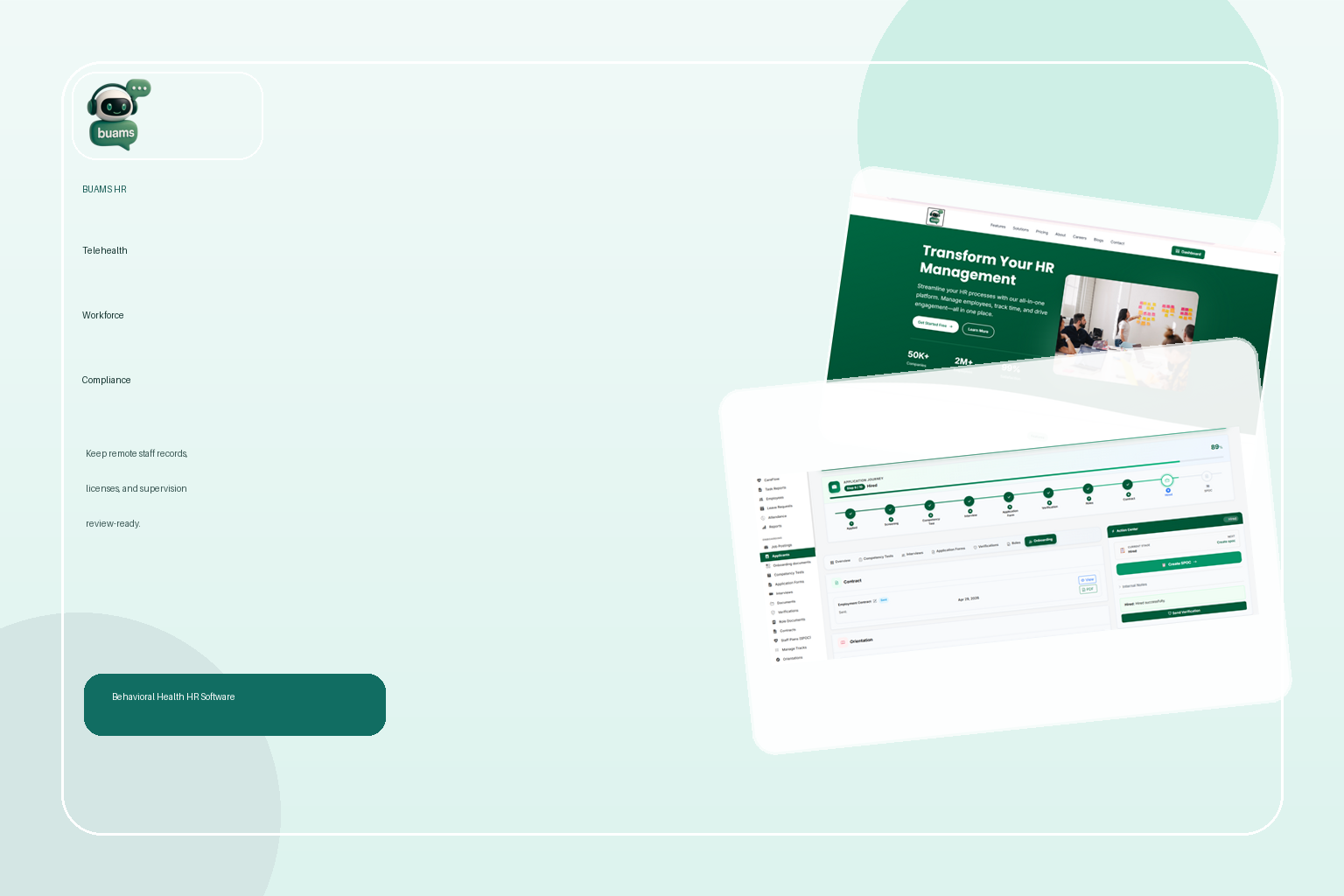
Telehealth has expanded how behavioral health providers recruit, schedule, supervise, and retain staff. Clinicians may now work from different offices, home settings, satellite programs, or neighboring jurisdictions while still participating in the same care model. That flexibility creates opportunity, but it also adds HR complexity. Remote and hybrid teams still need complete employee files, current licenses, documented supervision, policy acknowledgments, training proof, and clear status visibility.
When those records live across spreadsheets, inboxes, shared drives, and manual reminders, telehealth staffing quickly becomes harder to manage. HR may know a clinician is active, but not whether a required renewal is pending. A supervisor may assume documentation is complete, while HR is still waiting on forms. Leaders may expand virtual programs without a reliable way to confirm that workforce records are staying aligned across locations and roles.
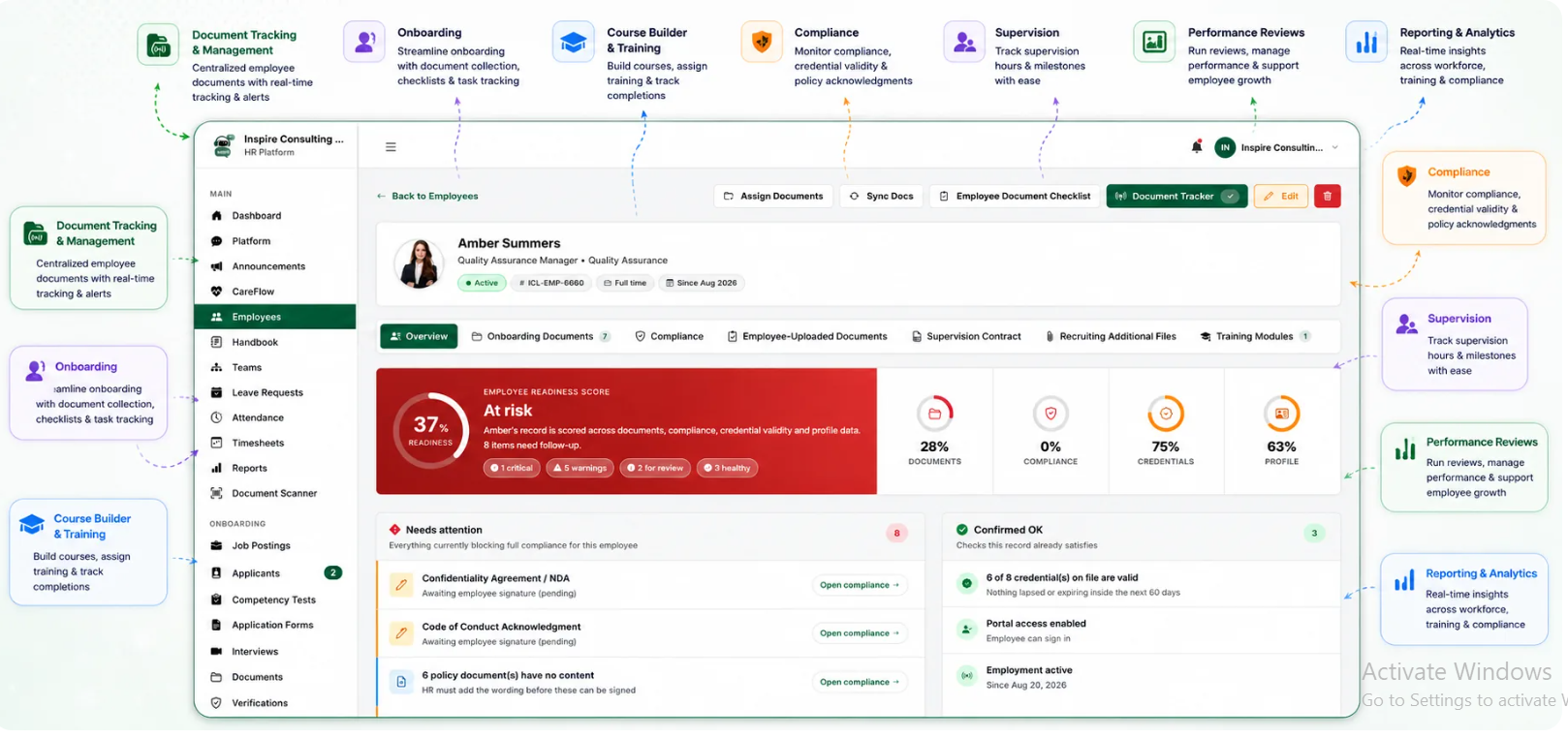
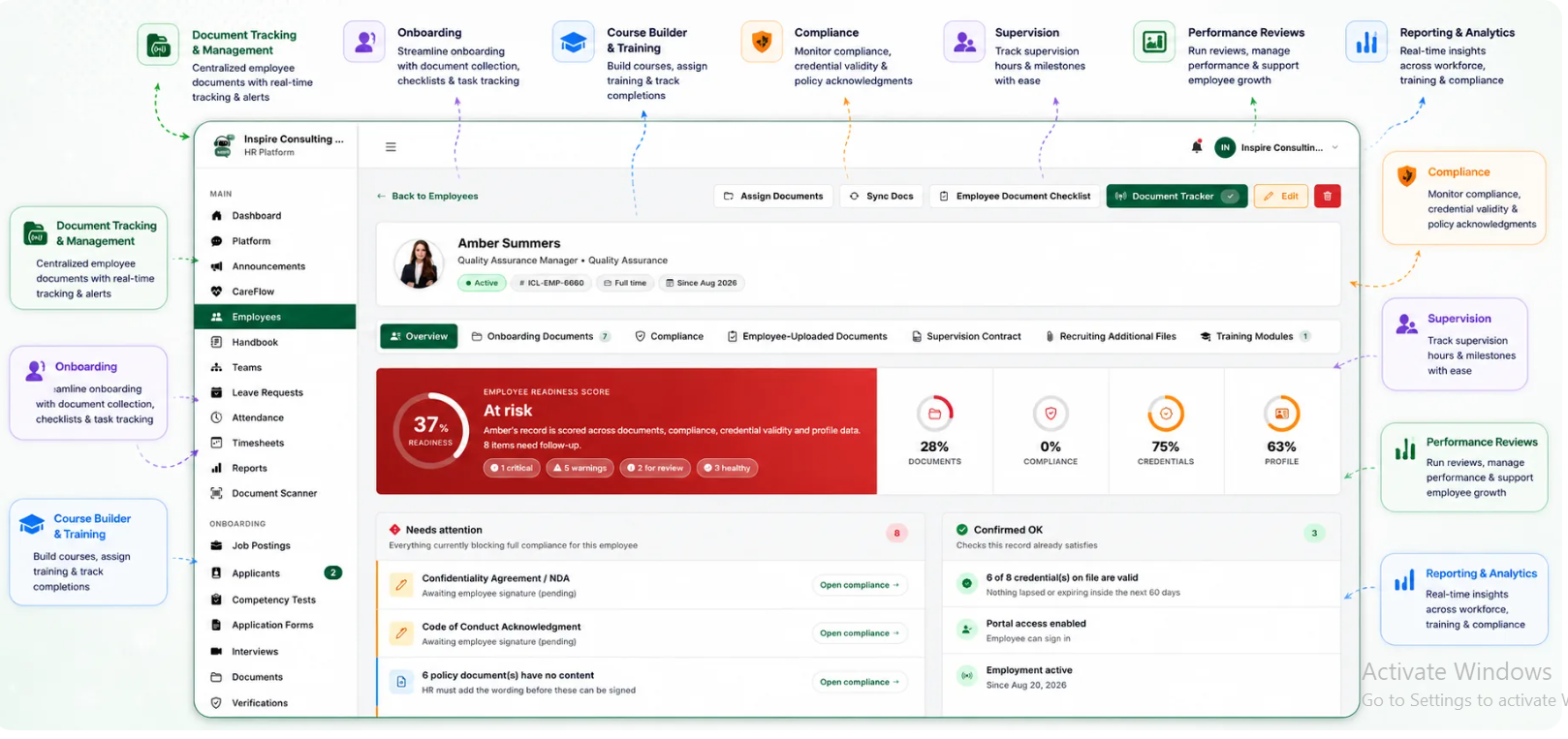
Telehealth workforce compliance software gives behavioral health organizations a more structured way to manage that reality. Instead of treating remote work as a side process, it creates one operational system for tracking employee readiness, documentation, and follow-up tasks across distributed teams. For growing providers, that can reduce administrative risk while making telehealth staffing easier to scale.
Key Takeaways
What Is Telehealth Workforce Compliance Software?
Telehealth workforce compliance software is an HR and workforce operations solution built to support the documentation and oversight needs of remote and hybrid care teams. It helps organizations track the people, records, deadlines, and approvals that make telehealth staffing operationally safe and easier to manage. That can include employee files, role assignments, license-related information, onboarding steps, supervision records, policy sign-offs, and internal review notes tied to each staff member.
For behavioral health providers, the need is practical. Telehealth programs often involve clinicians working across multiple service lines, supervisors overseeing staff in different settings, and HR teams supporting employees who do not report to one central office every day. A dedicated workflow helps ensure that remote work does not weaken documentation discipline. Instead, it gives the organization a repeatable method for keeping records complete and responsibilities visible.
Why It Matters for Behavioral Health Providers
Behavioral health organizations cannot afford to let telehealth growth outpace HR structure. Even when care is delivered virtually, workforce expectations still depend on accurate records and timely follow-up. Teams need a dependable way to confirm that staff are properly onboarded, required documents are current, supervisory relationships are documented, and policy updates reach the right people. If those processes stay manual, remote work can multiply the number of small gaps HR has to chase.
That problem grows when providers expand to multiple programs or support staff who split time between in-person and virtual services. A clinician might be fully active in scheduling, yet still have a missing training acknowledgment. A supervisor change might happen operationally, but not be reflected clearly in the employee record. A telehealth-specific policy might be distributed, but the organization may struggle to prove who reviewed it. These are not unusual edge cases. They are everyday coordination problems that become more common as virtual service delivery grows.
Better workforce compliance processes help leaders scale more confidently. When remote staff records are centralized and task ownership is clear, HR can spend less time reconstructing status and more time preventing issues before they become disruptive.
Common Compliance Gaps in Remote and Hybrid Teams
Telehealth staffing does not create entirely new HR obligations. It makes existing obligations easier to lose track of when the workforce is dispersed. Many organizations discover that documentation quality varies more than expected once hiring, onboarding, supervision, and updates happen across different channels.
These breakdowns usually happen because the operating model is fragmented, not because teams do not care. A better system reduces the number of handoffs and makes it easier to see where documentation stands for each remote employee.
What to Look for in Telehealth Workforce Compliance Software
The right platform should help behavioral health providers manage distributed teams with the same rigor they expect from on-site operations. It should bring together records, workflows, and reminders so telehealth growth does not depend on manual memory.
Centralized employee records
Remote staffing creates more touchpoints, which makes scattered recordkeeping especially risky. HR should be able to review employee documentation, role history, internal notes, and related compliance materials in one place rather than hunting across disconnected systems.
Workflow visibility for remote follow-up
Organizations need to see which onboarding items, policy acknowledgments, training tasks, or documentation requests are still open for remote and hybrid employees. A visible workflow helps prevent silent delays that only surface when a deadline or review is already approaching.
Supervision and reporting-line clarity
Telehealth programs often change who oversees whom, especially when clinicians split time across programs or locations. Good software makes it easier to document supervisory assignments and keep that information aligned with the employee record so oversight expectations remain clear.
Documentation tied to compliance-sensitive events
Renewals, role changes, schedule shifts, remote work approvals, and policy updates should not live as isolated tasks. The stronger approach is to connect each event with the underlying employee file and any supporting documents so HR can explain the record later without reconstructing history.
Consistency across sites and service models
Behavioral health providers may operate clinics, community programs, mobile teams, and virtual services at the same time. A useful platform supports one repeatable process across those environments so telehealth staff are not managed under weaker or less visible documentation standards.
How BUAMS HR Helps Telehealth-Ready Behavioral Health Teams
BUAMS HR helps behavioral health organizations create a more dependable foundation for workforce documentation and compliance workflows. For telehealth teams, that means employee records, supporting documents, and operational follow-up can stay more closely connected as the organization grows. Instead of relying on separate trackers for remote staff, HR can work from a centralized system designed to reduce fragmentation.
That structure helps teams manage common telehealth workforce challenges more effectively, including:
For behavioral health providers, telehealth growth is easier to sustain when HR operations are built for visibility. BUAMS HR supports that by helping organizations standardize the recordkeeping and workflow discipline behind distributed care teams.
Final Thoughts
Telehealth workforce compliance software gives behavioral health providers a practical way to support remote staff without lowering documentation standards. When employee records, supervision details, policy acknowledgments, and compliance-related follow-up are easier to track, organizations can reduce avoidable gaps and respond with more confidence.
As telehealth programs continue to evolve, the strongest providers will be the ones that treat workforce documentation as part of operational readiness, not as an afterthought. BUAMS HR helps organizations build that readiness with a more organized, scalable system for managing behavioral health teams across virtual and in-person environments.