Behavioral health organizations often run into payroll friction for reasons that have nothing to do with payroll itself. A clinician finishes a shift at one site, covers another program later in the week, receives a supervisor sign-off by email, and then HR still has to confirm whether the documented hours match the role, location, and required approval path. When that process lives across texts, spreadsheets, paper signatures, and inbox searches, small delays can turn into payroll corrections, staff frustration, and weak audit trails. Timesheet attestation software gives behavioral health providers a more reliable way to confirm hours worked, record employee acknowledgment, capture manager review, and keep supporting documentation organized in one workflow.
Key Takeaways
What Is Timesheet Attestation Software?
Timesheet attestation software is a system that allows employees and supervisors to formally confirm recorded work hours before those records move downstream into payroll, compliance review, or internal reporting. In behavioral health settings, attestation matters because schedules are rarely simple. Staff may float between programs, cover after-hours assignments, complete field-based work, or split time across direct care, supervision, and administrative responsibilities. A basic time entry record may show that hours were entered, but it does not always prove that the employee reviewed them, that a supervisor approved them, or that any exceptions were resolved with clear documentation.
A strong attestation workflow adds accountability to the process. Employees can verify that their hours are accurate. Supervisors can confirm that the time aligns with site coverage, approved schedules, and any overtime or differential rules. HR can see whether the record is complete before it becomes a payroll issue. Instead of treating payroll problems as cleanup work after the fact, organizations can catch discrepancies earlier and create a more defensible record of who reviewed what and when.
Why It Matters for Behavioral Health Providers
Behavioral health providers operate in environments where workforce records support more than compensation. Hours can connect to staffing coverage, supervision expectations, service continuity, and audit readiness. If an employee later questions a missed differential, a disputed overtime block, or a shift assignment that crossed sites, leadership needs more than a vague note in an email thread. They need a traceable record that shows the time submitted, the person who attested to it, the manager who reviewed it, and any approved exceptions.
This is especially important for organizations managing community-based services, residential programs, outpatient clinics, crisis coverage, or multi-site operations. Staff assignments can change quickly. Coverage decisions may happen after normal business hours. Supervisors may approve time while balancing urgent operational demands. Without a structured system, teams spend unnecessary time reconstructing what happened. That slows payroll close, increases avoidable rework, and creates frustration for employees who want predictable and accurate pay.
Timesheet attestation software also supports internal consistency. When every employee follows the same review path and every supervisor uses the same approval checkpoints, organizations reduce the risk that one team is documenting exceptions well while another relies on memory or informal messages. That consistency matters when leaders want confidence in payroll readiness, labor reporting, or workforce oversight.
Common Breakdown Points in Manual Timesheet Review
Many behavioral health organizations do not struggle because staff are careless. They struggle because the workflow itself is fragmented. Common breakdown points include delayed employee sign-off, manager approvals that happen by email without a durable record, unclear ownership for correcting discrepancies, and poor visibility into which time records are still incomplete. Teams may also find it difficult to document why a shift ran long, why premium pay applied, or why a staff member worked outside a usual assignment.
Another issue is the disconnect between timesheets and the rest of the employee record. If HR has to cross-check role status, location assignment, supervisor relationships, or policy acknowledgments in separate systems, every exception takes longer to resolve. That is where a behavioral health HR platform becomes valuable. The closer time-related attestations sit to the rest of the workforce record, the easier it becomes to investigate exceptions without creating a separate administrative project.
What to Look for in Timesheet Attestation Software
Employee acknowledgment built into the workflow
The software should make it easy for employees to review recorded time and confirm accuracy on a regular cadence. That confirmation should be more than a checkbox hidden in a report. It should be a visible part of the process with a timestamp and a clear status that HR or supervisors can reference later.
Supervisor approval with exception visibility
Managers need a simple way to review hours, flag discrepancies, and approve or return records for correction. The best workflows make exceptions visible rather than burying them in comment threads. If overtime, location changes, or unusual shift patterns require extra review, those items should stand out.
Documentation that supports audits and disputes
Behavioral health organizations benefit from a record that shows the full chain of review. If a question comes up later, teams should be able to see who submitted the time, who attested to it, who approved it, and whether supporting notes were added. That kind of documentation can reduce payroll disputes and shorten internal investigations.
Connection to employee records and organizational structure
Timesheet review is easier when supervisors, roles, sites, and status changes are already organized in the same HR environment. If an employee transferred programs, changed supervisors, or moved into a new schedule pattern, the system should help reflect that context instead of forcing HR to stitch it together manually.
Operational reporting for incomplete items
Teams should be able to see which attestations are still pending before payroll deadlines arrive. A useful dashboard or queue can help HR follow up on incomplete records early, rather than discovering missing approvals during final payroll preparation.
Best Practices for a Smoother Payroll Readiness Process
First, define the attestation cadence clearly. Behavioral health providers should decide whether employees attest after each pay period, weekly, or after specific scheduling cycles. The process should match operational reality, not just payroll preference. Second, standardize exception categories. If staff regularly need to explain overtime, overnight coverage, travel between sites, or late schedule changes, use consistent documentation fields so patterns are easier to review over time.
Third, make supervisor ownership explicit. Attestation software works best when managers know what they are responsible for reviewing and by when. Fourth, connect the workflow to policy expectations. Employees should understand that attesting to time is part of accurate payroll, compliance discipline, and internal accountability. Finally, monitor the backlog. Repeated delays from the same teams or sites often point to workflow design issues, training gaps, or operational strain that leadership should address directly.
How BUAMS HR Helps
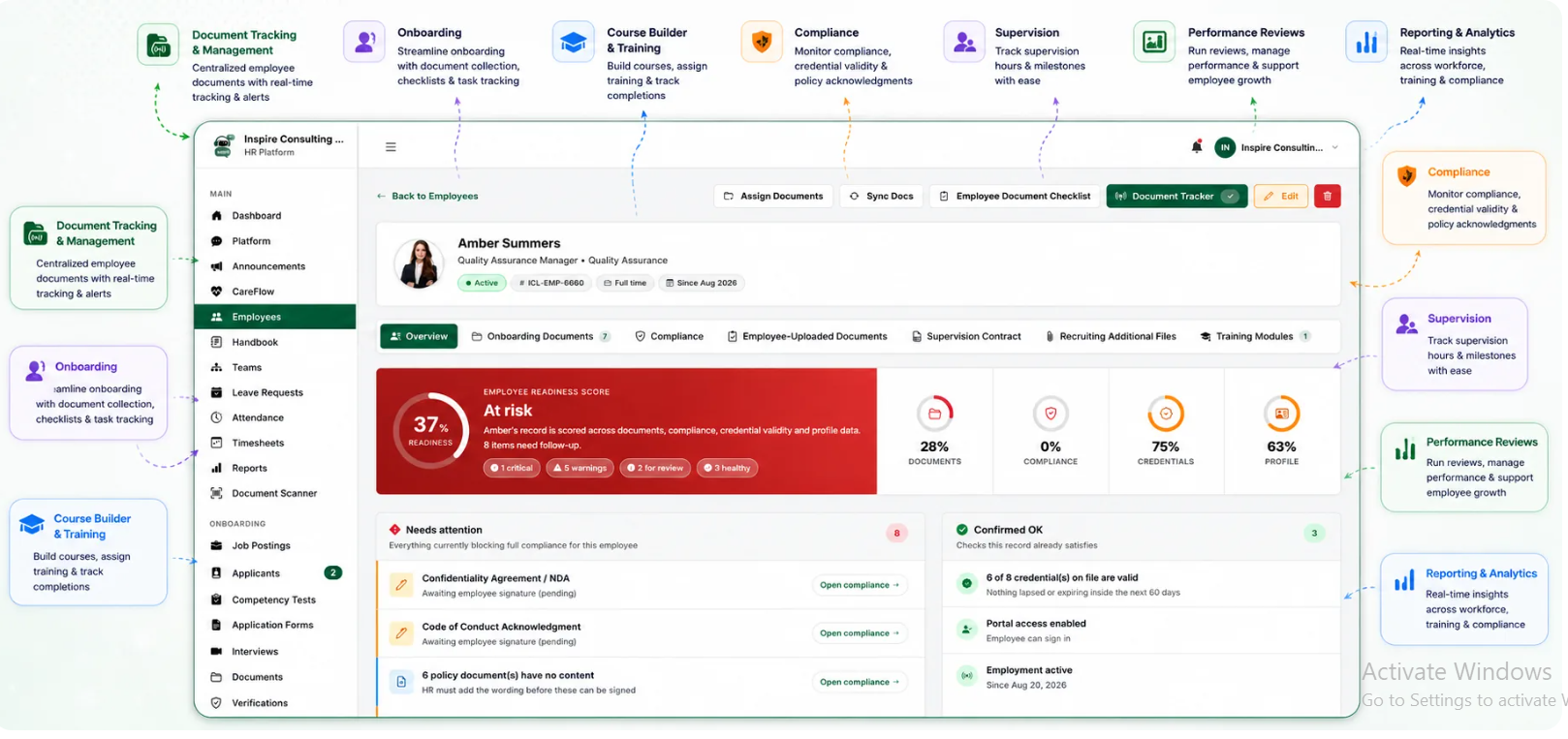
BUAMS HR helps behavioral health organizations manage workforce processes in a more connected and organized way. When employee records, supervisor relationships, compliance documentation, and workforce changes live in one HR system, teams gain a stronger foundation for time-related accountability. Instead of chasing context across disconnected tools, HR leaders can review records faster and resolve exceptions with better visibility.
For organizations looking to improve payroll readiness, BUAMS HR supports a structured operating model. Teams can keep employee information current, maintain cleaner documentation, and reduce the administrative drag that comes from fragmented approvals. That matters for growing providers that need consistent processes across sites, programs, and supervisors without adding unnecessary manual follow-up.
Just as important, BUAMS HR supports the compliance-aware culture behavioral health providers need. Workforce operations are not only about completing tasks. They are about showing that requirements were reviewed, decisions were documented, and records stayed organized. A better HR foundation makes timesheet attestation more practical because the surrounding workforce data is easier to trust.
Final Thoughts
Timesheet attestation software gives behavioral health providers a practical way to confirm hours, document approvals, and reduce payroll surprises before they spread. In a field where staff coverage changes quickly and documentation quality matters, a clear attestation process can improve both employee experience and operational control. Organizations that centralize workforce records and approval workflows are better positioned to close payroll cleanly, answer disputes with confidence, and maintain stronger administrative discipline as they grow.