Behavioral health providers cannot afford a messy handoff between HR, compliance, operations, and IT when a new employee or contractor needs access to systems. A clinician may be fully hired on paper but still unable to document care, complete required workflows, or access the tools needed to work safely on day one. On the other side, rushed access setup can create compliance blind spots if permissions are granted before training, acknowledgments, or role approvals are complete.
Workforce access management software gives behavioral health organizations a more structured way to coordinate who gets access to what, when, and based on which prerequisites. Instead of relying on scattered emails and manual follow-up, providers can tie permissions requests to role readiness, onboarding status, and documentation checkpoints. That is especially useful for growing organizations with multiple programs, locations, and service models where access requirements vary across roles.
Key Takeaways
What Workforce Access Management Software Covers
Workforce access management software helps organizations coordinate access requests, approvals, prerequisites, and documentation for the systems employees need to do their jobs. In behavioral health, that may include HR platforms, learning systems, scheduling tools, payroll portals, secure messaging tools, telehealth platforms, and clinical systems that require tightly controlled permissions.
The goal is not simply to turn access on faster. It is to make sure access is granted according to role, location, supervision model, and organizational policy. A case manager, prescriber, intake coordinator, and program supervisor may all need different permissions, different approval chains, and different training completion checks before they should be active in the systems they use.
Without a structured process, access provisioning often becomes an inbox problem. HR sends a note, a supervisor forwards another request, someone forgets a prerequisite, and the organization ends up with delays for some staff and excess access for others. Both outcomes create operational risk.
Why Access Coordination Becomes a Compliance Problem
In behavioral health settings, workforce access decisions affect more than convenience. They influence privacy, documentation quality, continuity of care, and the organization’s ability to show that people had the right access at the right time. If a staff member receives broad permissions before orientation, confidentiality acknowledgment, or role approval is finished, the risk is not theoretical. It can quickly become a governance issue.
The problem gets harder when organizations expand into multiple locations or operate across Maryland, DC, and different payer or program requirements. A supervisor might assume access is ready because hiring is complete, while IT may still be waiting for the final approval, and compliance may still need to confirm a training or credential requirement. If those checkpoints are disconnected, the organization loses control of readiness.
Transfers and internal promotions create similar issues. Employees who move into a new role may need new permissions, but they may also need some access removed. When that change is handled informally, organizations can end up with outdated permissions that no longer match the employee’s job responsibilities.
What to Look for in Workforce Access Management Software
Role-Based Permission Workflows
Behavioral health providers should be able to define access workflows by role so that the right systems, approvals, and prerequisites are attached automatically. That reduces manual interpretation and helps new staff follow a more consistent path to readiness.
Readiness Checkpoints Before Access Is Granted
A strong process should connect access to required events such as policy sign-off, orientation completion, supervisor approval, or role-specific training. This helps organizations avoid granting permissions too early simply because the start date is approaching.
Clear Ownership Across Teams
HR, compliance, operations, supervisors, and IT all play a part in workforce access. The software should show who owns each step, what is complete, and what is still blocking activation. That visibility reduces last-minute guessing and repeated follow-up.
Support for Transfers, Leaves, and Offboarding
Access management is not only a new-hire issue. The same system should help teams manage access changes when employees transfer, go on leave, return, or exit the organization. This is where many compliance gaps appear if the process only focuses on onboarding.
Audit-Friendly History
Organizations should be able to show when an access request was made, who approved it, what prerequisites were completed, and when a change took effect. That audit trail matters when leaders review incidents, respond to internal questions, or prepare for external scrutiny.
Best Practices for a Cleaner Access Process
How BUAMS HR Helps Behavioral Health Providers
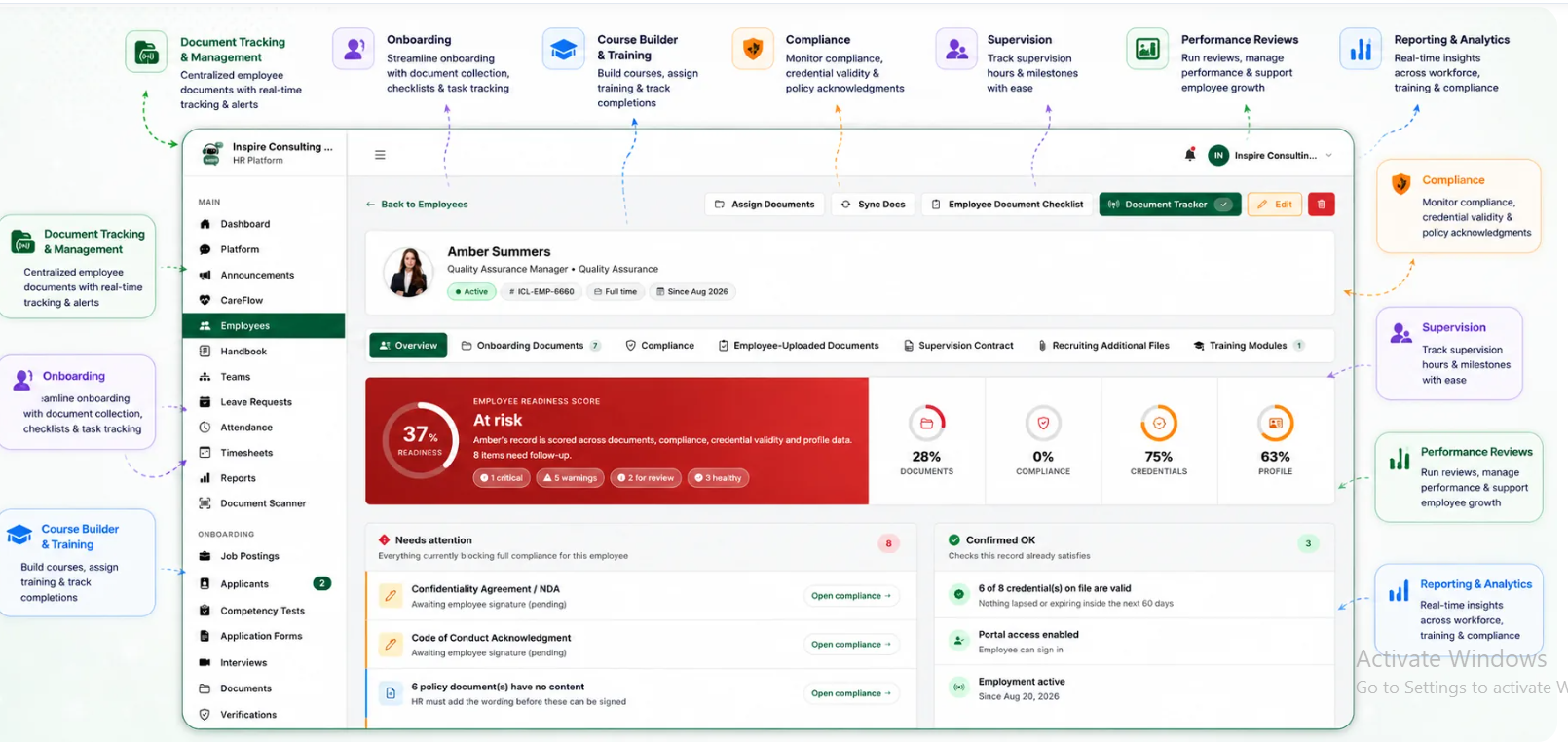
BUAMS HR helps behavioral health organizations bring more structure to workforce readiness by keeping onboarding tasks, approvals, documentation, and employee records connected in one place. That matters for access management because HR teams can see whether a worker has completed the steps that should come before permissions are activated, rather than treating access as a disconnected request.
With BUAMS HR, providers can standardize readiness workflows, maintain cleaner employee files, and improve visibility across departments that share accountability for launch decisions. Even when another system ultimately applies the technical permissions, BUAMS HR gives the organization a stronger operational record of who was cleared, what was completed, and where follow-up is still needed.
For growing behavioral health providers, that central coordination helps reduce start-date friction without sacrificing control. Teams can move faster because the process is clearer, not because oversight is skipped.
Final Thoughts
Workforce access management software is really about operational discipline. Behavioral health organizations need a reliable way to connect permissions with role readiness, documentation, and accountability so staff can start work on time without creating unnecessary compliance risk.
For providers trying to coordinate onboarding, internal changes, and access decisions across multiple teams, BUAMS HR offers a practical foundation for a cleaner and more defensible process.